Electric Bike vs Petrol Bike: How Much Money You Actually Save Every Month
Electric Bike vs Petrol Bike
If you ride a bike every day in Pakistan, you already know the pain of watching petrol prices climb almost every week. Petrol touched over Rs. 330 per litre in July 2026, and that number keeps moving. This is exactly why more people are now asking one simple question: does an electric bike really save money, or is it just a nice idea on paper?
We did the actual math. No guesswork, no rounded-off estimates. Just a real comparison between what a petrol bike costs you and what an electric bike costs you, based on daily riding in Pakistan.
Why This Comparison Actually Matters Right Now
Fuel prices in Pakistan are no longer revised every two weeks. Since mid-2026, OGRA has moved to a daily pricing system, which means petrol can go up or down almost every single day. For a normal commuter, this makes budgeting for fuel harder than ever.
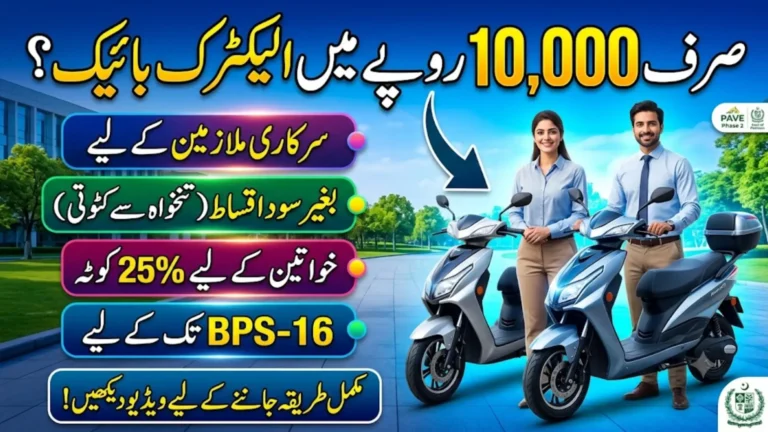
At the same time, the government has expanded the PM Electric Bike Scheme under the PAVE programme, offering subsidies and easy loans to make electric bikes more affordable. So this is genuinely a good time to sit down and compare both options honestly.
Petrol Bike: What It Actually Costs You Per Month
Most 70cc bikes in Pakistan give an average mileage of around 40 km per litre in normal city riding conditions, though this drops with traffic and short trips.
Let’s take a common daily commute of 30 km, which adds up to roughly 900 km a month.
- Monthly fuel needed: 900 km ÷ 40 km per litre = 22.5 litres
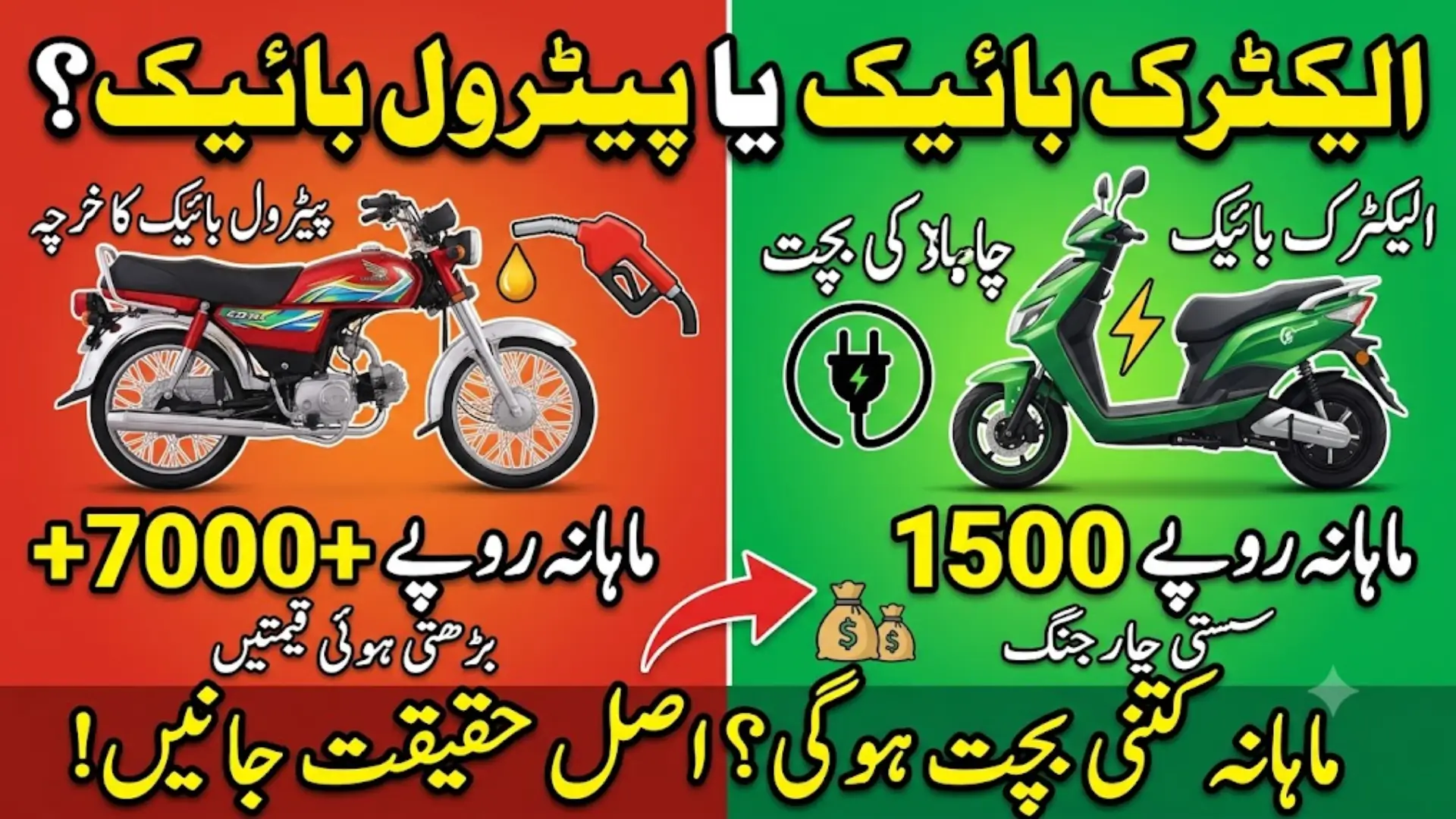
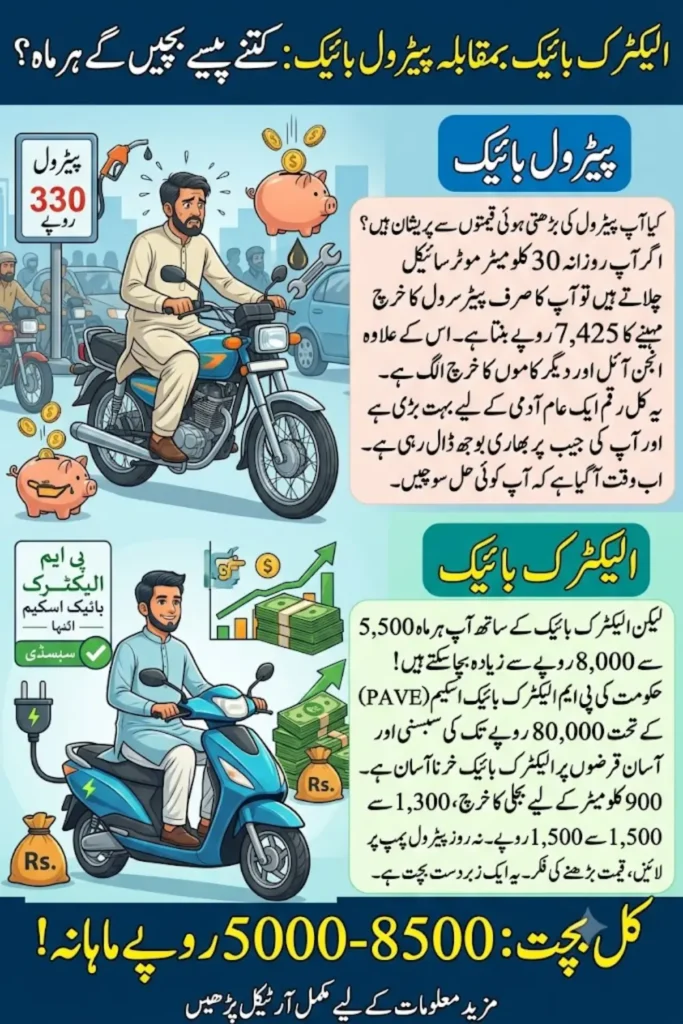
- At Rs. 330 per litre: 22.5 x 330 = Rs. 7,425 per month
This number only covers fuel. It does not include engine oil changes, chain lubrication, spark plug replacement, or the general wear and tear that petrol engines need every few months.
Electric Bike: What It Actually Costs You Per Month
Most electric bikes approved under the government scheme use around 1.5 to 2 units of electricity to cover 40 km, depending on the battery and motor.
Using the same 900 km monthly distance:
- Monthly electricity needed: roughly 40 to 45 units
- At an average household rate of Rs. 30 to 35 per unit (this varies by your usage slab and DISCO): 40 x 33 = around Rs. 1,300 to Rs. 1,500 per month
Electric bikes also have far fewer moving parts, so there is no engine oil to change and much less mechanical maintenance overall.
The Real Monthly Savings
| Cost Type | Petrol Bike | Electric Bike |
|---|---|---|
| Fuel/Charging cost (900 km/month) | Rs. 7,425 | Rs. 1,300–1,500 |
| Oil change & basic servicing | Rs. 400–600 | Almost none |
| Estimated monthly saving | — | Rs. 5,500 to 6,000+ |
Government officials working on the PAVE programme have also pointed out that electric bike owners can save close to Rs. 8,000 a month compared to petrol bikes, depending on how much they ride and their local electricity rate. Our calculation above is a conservative, everyday estimate based on a normal commuting routine, so your actual saving could be higher if you ride more or lower if you ride less.
What About the Upfront Price Difference?
Electric bikes are usually a little more expensive to buy than a basic 70cc petrol bike, but the government subsidy under the PAVE scheme brings this gap down significantly. With a subsidy of up to Rs. 80,000 on electric bikes plus an easy installment loan option, most buyers recover the extra upfront cost within the first year, purely through fuel savings.
Other Savings People Often Forget
- No petrol pump queues or price shocks: You are not affected by daily petrol price hikes at all.
- Lower maintenance visits: Electric motors need far less servicing than petrol engines.
- No engine oil cost: This alone saves a few hundred rupees every month.
- Quieter and smoother ride: Not a direct saving, but it does reduce long-term wear on certain parts.
Things to Keep in Mind Before Switching
- Charging depends on your home having a stable electricity connection. Frequent load-shedding in your area can affect daily charging routines.
- Battery life matters. A good quality battery should last several years, but always check the warranty before buying.
- Resale value of electric bikes is still developing in Pakistan compared to the well-established petrol bike resale market.
Conclusion
Based on real numbers, an electric bike can save a regular commuter somewhere between Rs. 5,500 and Rs. 8,000 every month compared to a petrol bike, mainly because electricity costs far less than petrol for the same distance. Add the government subsidy on top, and the switch becomes financially smart for most daily riders, not just an environmental choice.
Frequently Asked Questions
1. Is an electric bike really cheaper than a petrol bike in Pakistan?
Yes, for daily riding, electric bikes cost significantly less in fuel or charging expenses, usually saving thousands of rupees every month.
2. How much does it cost to fully charge an electric bike?
On average, charging enough electricity for about 40 km costs roughly Rs. 45 to Rs. 70, depending on your electricity tariff slab.
3. Do electric bikes need less maintenance than petrol bikes?
Yes, since they have fewer mechanical parts, there is no engine oil to change and generally lower servicing costs over time.
4. Can I get a subsidy on an electric bike in Pakistan?
Yes, under the PM Electric Bike Scheme (PAVE programme), eligible applicants can get a subsidy along with an easy installment loan option.
5. How long does an electric bike battery usually last?
Most standard batteries last a few years with regular use, though the exact life depends on the brand, charging habits, and battery quality.
6. Does load-shedding affect electric bike charging?
Yes, if your area faces frequent power outages, you may need to plan your charging time around available electricity hours.