Petrol Prices Now Change Daily — Why Electric Bikes Are a Safer Bet
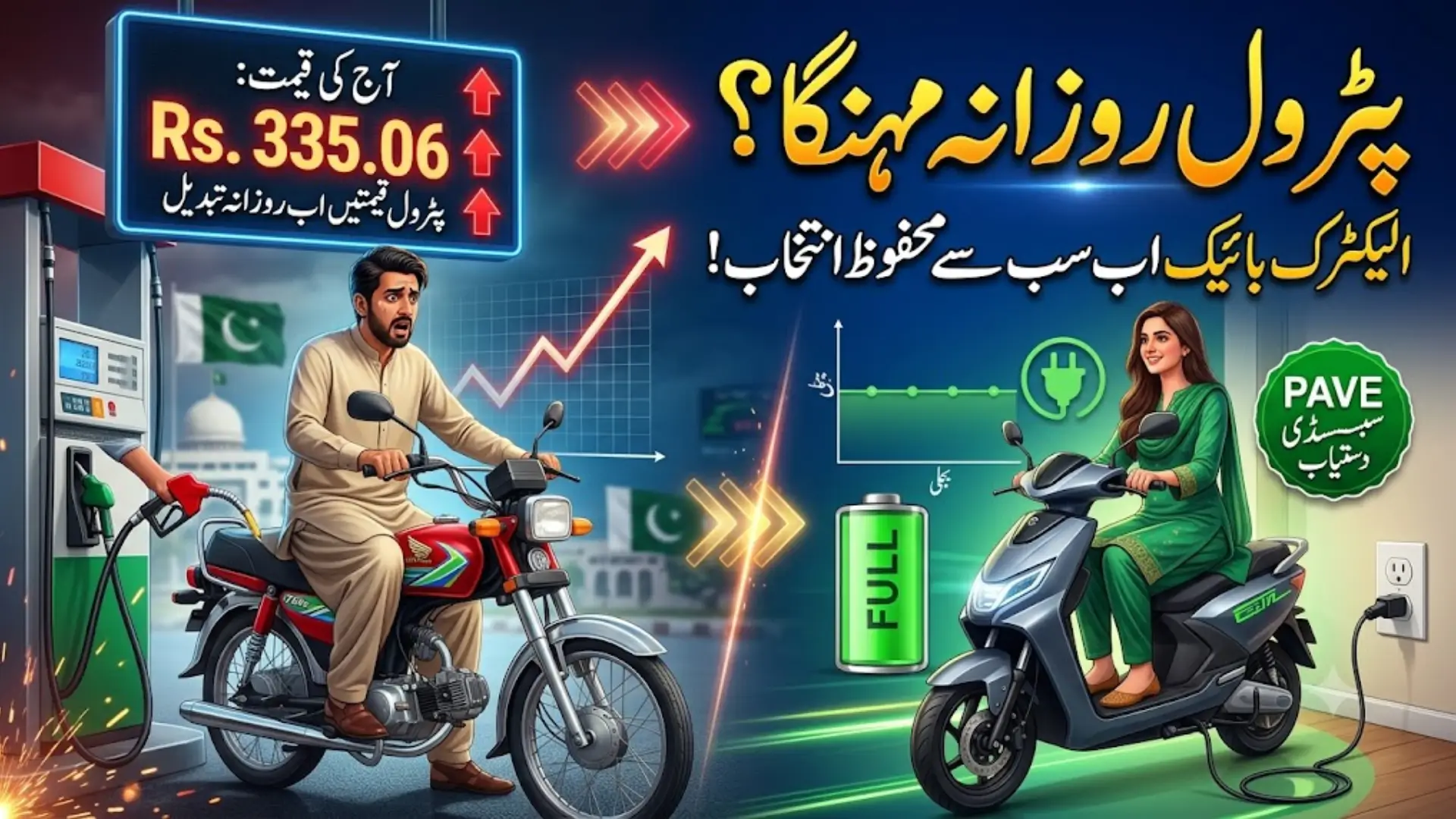
Checking petrol prices used to be something you did once every two weeks. That has changed completely. Since mid-July 2026, prices can move up or down every single day, and this shift is making it harder for regular commuters to plan their monthly budget.
If you ride a petrol bike and have noticed your fuel expenses becoming unpredictable, this article explains exactly why that is happening and why an electric bike now makes more financial sense than before.
What Changed With Petrol Pricing in Pakistan
On July 17, 2026, the government introduced a daily petroleum pricing mechanism, replacing the older system where prices were only revised every two weeks. Under this new system, the Oil and Gas Regulatory Authority (OGRA) adjusts petrol and diesel rates every single day based on international oil prices and currency movements.
The main reason behind this shift is the renewed conflict between Iran and Israel, which has caused sharp swings in global oil markets. The government’s goal is to pass these international price changes to consumers faster, instead of absorbing weeks of losses or delaying price hikes.
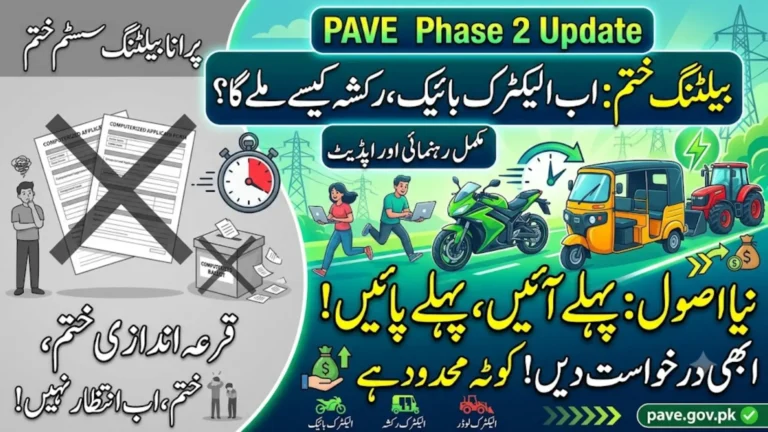
Also Read: PAVE Phase 2 Update: Balloting Removed, Here Is What Changed
Why Your Fuel Cost Has Become Unpredictable
Under the old fortnightly system, you knew your fuel budget would stay fixed for at least fifteen days. Now, that certainty is gone.
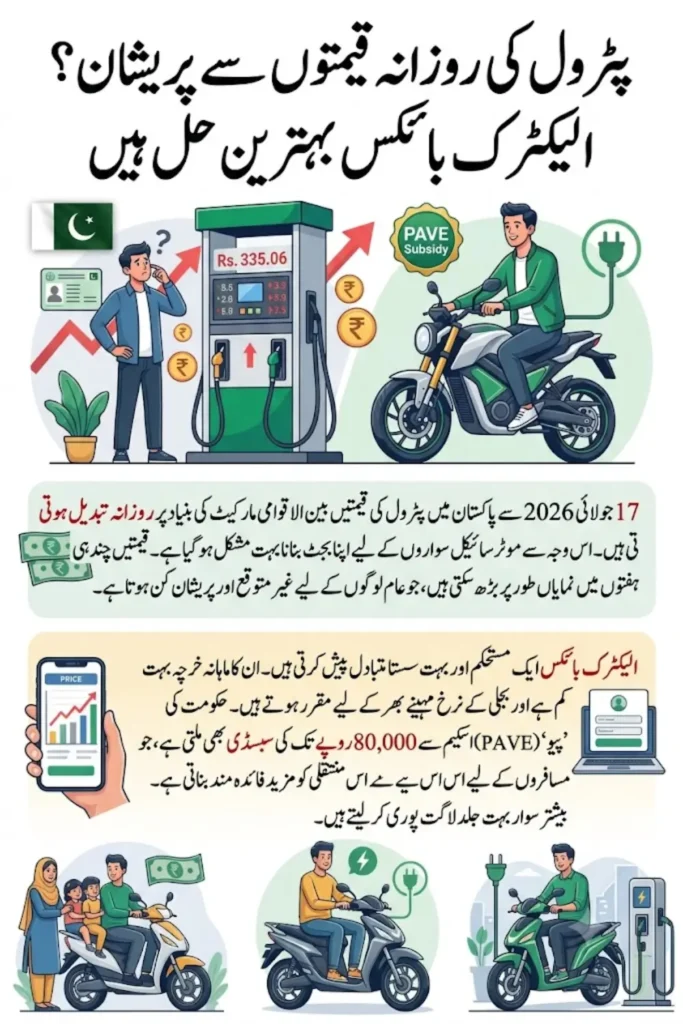
As of July 30, 2026, petrol stands at Rs. 335.06 per litre, after a small cut of Rs. 0.75. But this small relief follows a much bigger trend: petrol prices have climbed by around Rs. 24.25 per litre over just the past thirteen days.
This is the core problem with daily pricing. A single day might bring a small discount, but the overall direction over two weeks can still leave you paying significantly more than before, and you often will not notice the total impact until you look back at your monthly spending.
Also Read: Electric Bike vs Petrol Bike: How Much Money You Actually Save Every Month
How This Affects a Regular Petrol Bike Rider
Consider a commuter riding around 900 km a month on a 70cc petrol bike, which typically needs about 22.5 litres of fuel. At the current rate, that comes to roughly Rs. 7,540 a month.
Under daily pricing, this number is no longer fixed. If prices trend upward over several weeks, as they have recently, your monthly fuel cost can rise by a few hundred or even a few thousand rupees without any change in your riding habits.
This is different from the past, where a fortnightly adjustment gave riders at least some warning and stability to plan around.
Why Electric Bikes Offer More Predictable Costs
Electricity tariffs in Pakistan do change over time, but nowhere near as frequently or unpredictably as daily petrol pricing. Most households are billed monthly, based on a known tariff slab, which makes budgeting far easier.
For the same 900 km monthly distance, an electric bike typically uses around 40 to 45 units of electricity. At an average rate of Rs. 30 to 35 per unit, this comes out to roughly Rs. 1,300 to Rs. 1,500 a month, a cost you can estimate with much more confidence than daily petrol prices allow.
Side-by-Side Comparison
| Cost Factor | Petrol Bike | Electric Bike |
|---|---|---|
| Price changes | Daily, based on global oil market | Monthly, based on fixed tariff slabs |
| Monthly cost (900 km) | Roughly Rs. 7,540, but rising | Roughly Rs. 1,300–1,500 |
| Budget predictability | Low, can shift daily | High, known in advance |
| External risk factor | International conflicts, currency swings | Domestic electricity policy only |
This table shows the real difference isn’t just about cost, it’s about how much control you have over planning your monthly expenses.
The Bigger Picture: Why This Matters Beyond Just Money
Daily pricing means your fuel expense is now tied directly to global events far outside Pakistan, including conflicts in the Middle East that have nothing to do with local demand. This kind of exposure makes long-term financial planning genuinely difficult for salaried workers and small business owners who rely on their bikes daily.
Electric bikes remove this specific risk from your monthly budget. While electricity tariffs can still change over time due to domestic policy, they are not exposed to the same day-to-day volatility that international oil markets currently create.
Does the Government Subsidy Still Make Switching Worthwhile?
Yes. Under the PAVE electric bike scheme, buyers can still get a subsidy of up to Rs. 80,000 on an approved electric motorcycle, along with an easy installment option if needed. Combined with the lower and steadier running cost, most daily commuters recover the price difference within the first year simply through fuel savings.
Given that petrol prices are now reacting to international tensions in real time, this subsidy window makes switching now a more financially sound decision than waiting.
Also Read: 600 Free Electric Bikes for Top HSSC Students: Who Qualifies?
What Petrol Bike Riders Should Do Right Now
- Track your actual monthly fuel spending for the next two weeks instead of just checking the daily rate, since the trend matters more than any single day’s price.
- Compare your real numbers against an electric bike’s estimated monthly cost using your own riding distance.
- Check your eligibility for the PAVE subsidy before deciding, since the financial gap between petrol and electric bikes is currently wider than usual.
Also Read: Govt Employees Can Get an Electric Bike for Just Rs. 10,000 – Here’s How
Conclusion
Since Pakistan moved to daily petrol pricing on July 17, 2026, fuel costs have become harder to predict, with petrol rising by over Rs. 24 per litre in just thirteen days despite occasional small cuts. Electric bikes offer a steadier, more predictable monthly cost, and with the PAVE subsidy still active, switching now is a practical way to protect your budget from daily fuel price swings.
Also Read: 600 Free Electric Bikes for Top HSSC Students: Who Qualifies?
Frequently Asked Questions
1. Why did Pakistan switch to daily petrol pricing?
The government introduced daily pricing on July 17, 2026, to pass international oil price changes to consumers faster, largely driven by volatility from the Iran-Israel conflict.
2. How much has petrol increased recently?
Despite a small cut on July 30, petrol prices have risen by around Rs. 24.25 per litre over the previous thirteen days.
3. Do electricity prices for charging an electric bike change daily too?
No, electricity tariffs are billed monthly based on fixed slabs, making electric bike running costs far more predictable than daily petrol prices.
4. Is it still worth buying an electric bike with the PAVE subsidy right now?
Yes, the subsidy of up to Rs. 80,000 combined with lower running costs means most riders recover the cost difference within the first year.
5. How can I check today’s petrol price in Pakistan?
You can check the latest OGRA-notified rates through official government announcements or trusted fuel price trackers updated daily.
6. Does daily pricing mean petrol will always go up?
No, prices can go up or down daily depending on international oil rates and the exchange rate, but the overall trend can still increase significantly over just a few weeks.
Also Read: CM Punjab Electric Bike Scheme 2026: 100,000 Bikes for Students