Omoda 7 PHEV Launch: What It Means for EV Buyers
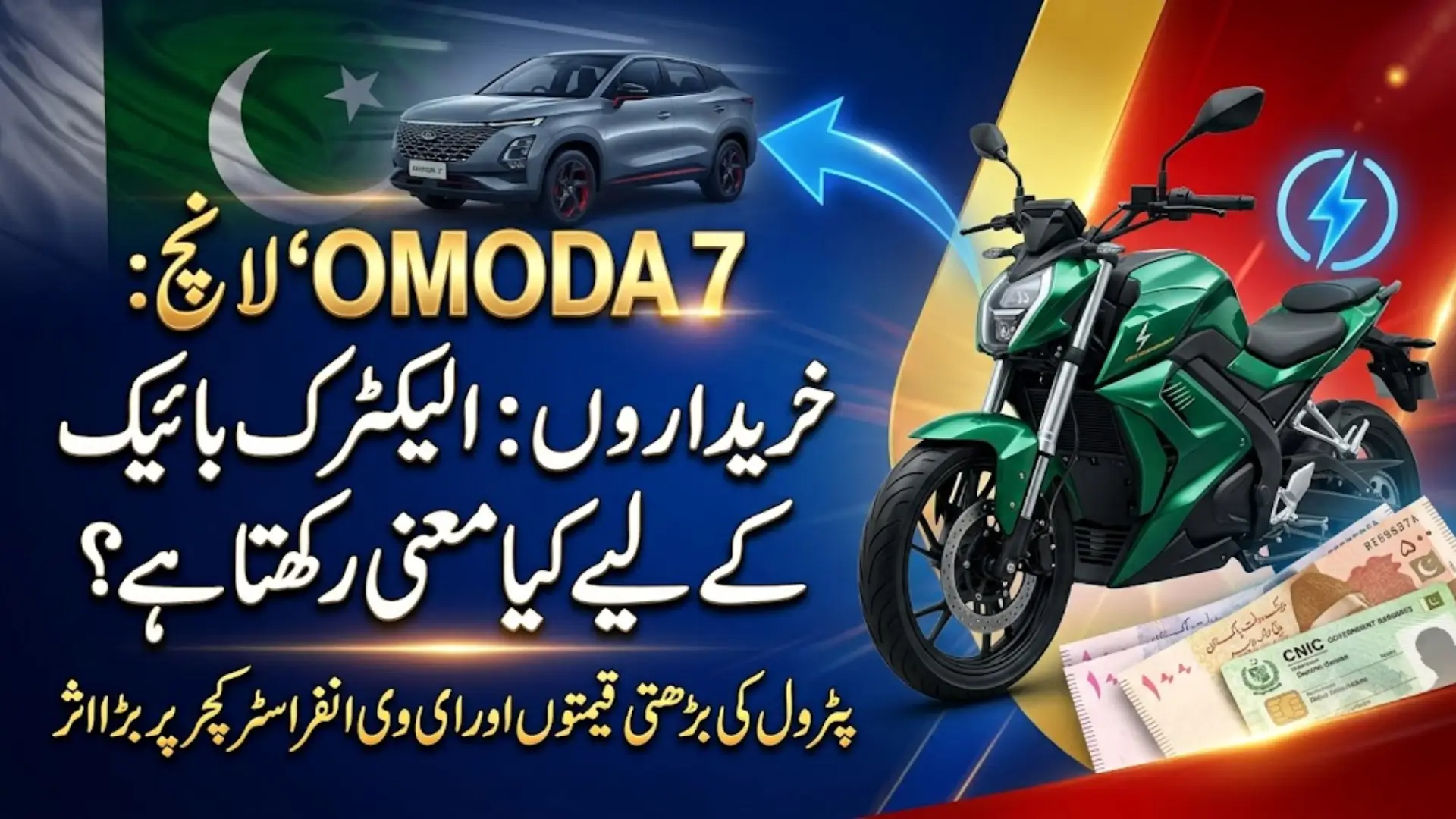
A new plug-in hybrid SUV just entered Pakistan’s market, and on the surface, it has nothing to do with electric bikes. But look a little closer, and the Omoda 7 PHEV launch tells a bigger story about where the entire vehicle industry in Pakistan is heading, including the two-wheeler segment that most everyday commuters actually care about.
Here is what was announced, why so many brands are suddenly launching similar vehicles, and what this trend actually means if you are considering an electric bike rather than a car.
What Omoda Just Announced
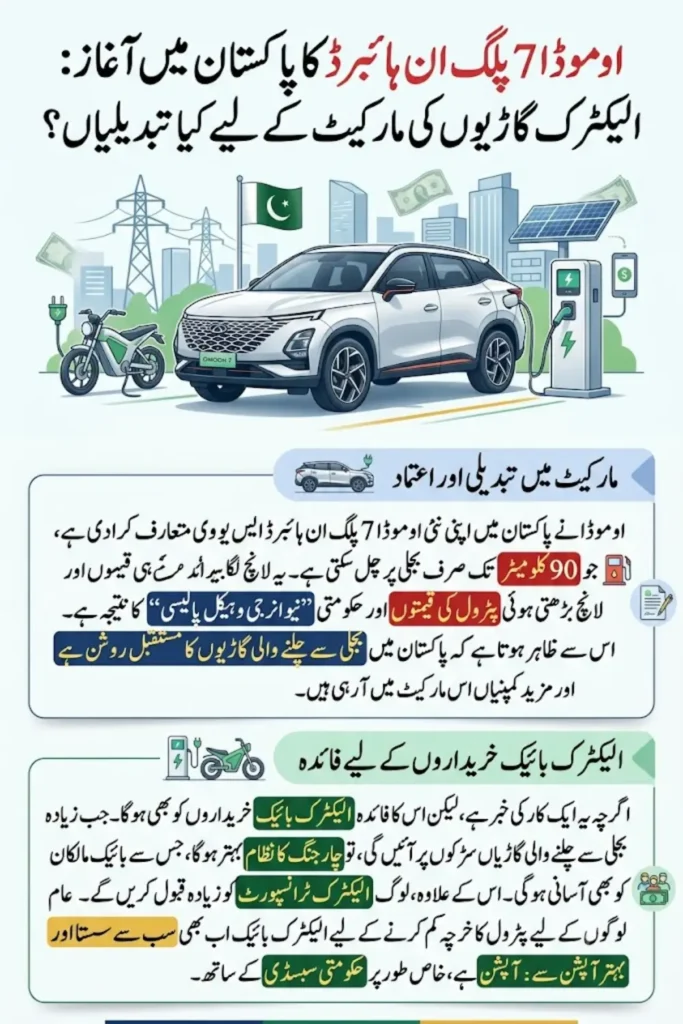
Omoda officially unveiled the Omoda 7 PHEV, a mid-size plug-in hybrid SUV positioned above its existing Omoda 5 model. The company has not released pricing or booking details yet, saying both will be revealed at the vehicle’s official launch in August.
Under the hood, the Omoda 7 PHEV combines a 1.5-litre turbocharged engine with a dedicated hybrid transmission, producing a combined 341 horsepower and 525 Nm of torque. Its 18.4 kWh battery offers a claimed electric-only range of more than 90 km, with a combined range of up to 1,200 km when both the battery and fuel tank are full.
The SUV also comes loaded with features aimed at the premium segment, including a panoramic sunroof, 20-inch alloy wheels, a 15.6-inch infotainment screen with a sliding “Glide Function,” and safety features like eight airbags, autonomous emergency braking, and adaptive cruise control.
Also Read: 600 Free Electric Bikes for Top HSSC Students: Who Qualifies?
Why So Many PHEVs Are Launching in Pakistan Right Now
The Omoda 7 PHEV is not an isolated launch. Over the past year, Pakistan’s SUV market has seen a steady stream of plug-in hybrid and hybrid vehicles, including the Chery Tiggo 7, Tiggo 8, and Tiggo 9, the Haval H6 facelift, the second-generation MG HS, and the Deepal S05.
This pattern is not a coincidence. It lines up directly with the government’s New Energy Vehicle (NEV) Policy 2025-30, which was designed to encourage manufacturers to bring electrified vehicles into Pakistan through duty incentives and a supportive regulatory environment. At the same time, unpredictable and rising petrol prices, driven partly by regional tensions affecting global oil markets, have made buyers more open to vehicles that can run on electricity for daily use.
Also Read: CM Punjab Electric Bike Scheme 2026: 100,000 Bikes for Students
How This Connects to the Electric Bike Market
It would be easy to assume that SUV launches like this one only matter to car buyers, but the connection to electric bikes is more direct than it looks.
Manufacturer Confidence Signals a Bigger Shift
When brands invest in electrified vehicles at the SUV level, it shows they see genuine long-term demand for electric mobility in Pakistan, not just a short-term trend. This kind of confidence tends to pull the rest of the industry along with it, including component suppliers, battery technology, and charging infrastructure that ultimately benefits electric bikes too.
Charging Infrastructure Grows for Everyone
Every new PHEV or EV on the road adds pressure on the government and private companies to expand charging infrastructure. While cars typically need more powerful charging setups than bikes, the overall push toward more public charging stations across the country makes life easier for electric bike owners as well, especially those who travel between cities.
Public Perception Shifts Faster With Visible Cars
A premium SUV with a large touchscreen and a “Glide Function” naturally attracts more media attention than a subsidised electric bike. But every headline about a new PHEV also normalises the idea of electric mobility for the average Pakistani buyer, which gradually makes electric bikes feel like a mainstream option rather than an experimental one.
Also Read: CM Punjab Rehmat Card Enters New Phase as Digital Payments Begin
The Real Cost Comparison Most People Miss
Here is where the story becomes genuinely useful for everyday commuters rather than just car enthusiasts.
| Vehicle Type | Approximate Price Range | Who It’s Really For |
|---|---|---|
| Omoda 7 PHEV (expected) | Likely several million rupees, based on similar PHEV SUVs in this segment | Premium buyers upgrading from a mid-size SUV |
| Electric Bike (PAVE subsidised) | Roughly Rs. 150,000 to Rs. 250,000, after up to Rs. 80,000 subsidy | Daily commuters looking to cut fuel costs |
While a PHEV SUV and a subsidised electric bike are aimed at completely different buyers, the underlying motivation behind both is the same: reducing dependence on petrol as prices become harder to predict. For most commuters in Pakistan, an electric bike delivers that same fuel-saving benefit at a small fraction of the cost, without needing a large upfront investment or a car loan.
Also Read: Punjab Teachers Can Get an Electric Bike Through PTF — Full Details
What This Means If You’re Choosing Between Waiting and Buying
If you were holding off on an electric bike purchase because you were unsure whether EV adoption would really take off in Pakistan, the steady wave of PHEV launches from major manufacturers is a strong signal that the shift is already happening, not something that might happen someday.
- Manufacturer investment is already here. Multiple global brands are betting on Pakistan’s electrified vehicle market, which reduces the risk that support for EVs and PHEVs fades out quickly.
- Charging and service infrastructure will keep expanding. More electrified vehicles on the road generally means more investment in the ecosystem that supports them.
- Government subsidies for electric bikes remain active right now. Waiting for the broader market to mature does not change your eligibility for today’s PAVE subsidy, and prices or terms could shift as the scheme evolves.
Also Read: Petrol Prices Now Change Daily — Why Electric Bikes Are a Safer Bet
Conclusion
The Omoda 7 PHEV launch is a car story on the surface, but it reflects a much larger shift toward electrified mobility in Pakistan, one that is also shaping the environment electric bikes exist in. If your goal is simply to cut fuel costs on your daily commute, an electric bike remains the far more practical and affordable choice, and the current wave of EV confidence in the broader market only strengthens the case for buying now rather than waiting.
Also Read: Chinese Company to Build EV Charging Stations in Pakistan
Frequently Asked Questions
1. Has the Omoda 7 PHEV price been announced in Pakistan?
No, pricing and booking details have not been released yet. Omoda has confirmed both will be announced at the vehicle’s official launch in August 2026.
2. What is the electric-only range of the Omoda 7 PHEV?
It offers a claimed electric-only range of more than 90 km based on WLTP testing, with a combined range of up to 1,200 km on a full battery and fuel tank.
3. Why are so many PHEV SUVs launching in Pakistan at the same time?
This trend is largely driven by the New Energy Vehicle Policy 2025-30, along with rising and unpredictable petrol prices that are pushing both manufacturers and buyers toward electrified options.
4. Does the growth in PHEV cars actually affect electric bike buyers?
Yes, indirectly. Growing investment in electrified vehicles tends to expand charging infrastructure and shift public perception, both of which benefit the broader EV market, including electric bikes.
5. Is an electric bike still a better option than waiting for more affordable EVs or PHEVs?
For most daily commuters focused on cutting fuel costs, yes, since electric bikes are significantly cheaper upfront and currently benefit from an active government subsidy under PAVE.
6. Does the Omoda 7 PHEV compete with electric bikes in any way?
No, they serve completely different buyers and budgets. The Omoda 7 PHEV is a premium SUV, while electric bikes are aimed at affordable, everyday commuting.
Also Read: Pink Scooty Scheme Phase 2: Registration Status and How to Avoid Fake Websites